How the DTP File Preparation Service Works
Documents that are meticulously prepared and optimized prior to translation begin with an expert DTP solution known as File Preparation. This underrated service ensures clean translation memories, maintains consistency across documents, and significantly reduces overall translation costs.
By the end of this guide, you’ll understand how thorough file preparation, leveraging various DTP factors and techniques, helps address these challenges before translating documents, contributing to successful translation projects and consistently high-quality outcomes.
What is File Preparation
File Preparation, or pre-translation processing, involves organizing and formatting content specifically for translation. Proper preparation ensures accuracy, preserves meaning, reduces translation costs, and enhances workflow efficiency.
The creation of documents, including the design and arrangement of content, is a key part of file preparation, ensuring that layouts are ready for translation.
What proper File Preparation means for CAT Tools
When CAT tools encounter files that are not properly prepared for translation, they often struggle to accurately read and segment the content. Unclean tags, inconsistent formatting, broken sentences, and embedded objects can confuse the software, causing incorrect text segmentation and misinterpretation of the document structure.
This leads to translation memory mismatches, unnecessary translation costs, and delays in the translation process. Without proper file preparation, CAT tools cannot efficiently leverage their full capabilities, resulting in lower translation quality and higher costs.
Therefore, proper File Preparation means it will assist CAT Tools to produce quality translated output.
Who uses CAT Tools?

CAT (Computer-Aided Translation) tools are primarily used by professional translators to efficiently handle large-scale translation projects. These tools help streamline the translation process by managing terminology, maintaining consistency, and leveraging translation memories. However, the effectiveness of CAT tools heavily depends on proper file preparation and optimization before translation begins.
Without accurate file preparation, documents may contain unclean tags, improper segmentation, and formatting inconsistencies that hinder the CAT tools’ ability to process content accurately.
DTP specialists play a crucial role in overcoming these challenges. They ensure that complex layouts and formatting issues are addressed properly for translation purposes, facilitating translators to do the translation properly.
In summary, while professional translators use CAT tools to enhance translation efficiency, the part of work done by skilled DTP specialists is essential to achieve high-quality translation output.
FREE Download: Desktop Publishing (DTP) Project Checklist
Use this quick self-assessment to spot gaps in your DTP process. You’ll see where quality drops, where delays come from, and how you can cut costs when managing multilingual documents.
FREE Download: Desktop Publishing (DTP) Project Checklist
Use this quick self-assessment to spot gaps in your DTP process. You’ll see where quality drops, where delays come from, and how you can cut costs when managing multilingual documents.

Why are files often not prepared for translations
In many cases, files submitted for translation are not adequately prepared, leading to challenges to translation and desktop publishing process. Several factors contribute to this common issue:
Lack of awareness – Many clients or document creators are unaware of the importance of proper file preparation before translation. They may assume that sending the page layout and original files as-is is sufficient, not realizing that formatting inconsistencies and technical issues can disrupt the translation workflow.
Time constraints – Tight deadlines often lead to rushing the translation, with little time allocated for thorough file preparation. This can result in sending documents with inconsistent formatting, embedded images, or locked sections that complicate translation.
Complex file formats – Some documents are created using advanced design or layout software (such as Adobe InDesign or Microsoft Publisher) that require specialized knowledge to prepare correctly for translation. Without access to the original design files or expertise in these tools, proper preparation is often overlooked.
Cost Considerations – Some clients may try to minimize expenses by skipping professional desktop publishing or file preparation services, not realizing that this often leads to higher costs later due to revisions and formatting fixes.
Understanding these common reasons highlights the importance of incorporating professional desktop publishing services and thorough file preparation into the translation workflow.
How to determine if you need DTP services for your translation project
Initially, preparing documents, particularly those already in editable formats, might appear unnecessary. For instance, a packaging manufacturer from the USA requiring Italian translation services for their business documents may not notice underlying formatting issues, potentially disrupting the translation workflow.
Before submitting documents for translation, check for these optimization indicators to determine if professional, multilingual desktop publishing services are necessary:
Inconsistent formatting – Variations in fonts, sizes, and styles can cause formatting issues in CAT tools.
Unusual text breaks – Odd breaks or inconsistent text flow may cause segmentation problems, hindering the efficient use of translation memory.
Corrupted or uneditable elements – Embedded text in images, locked sections, or unpredictable content behavior are common preparation issues.
Unusually large file sizes – Files disproportionately large relative to their content often indicate hidden formatting issues or embedded objects needing cleanup.
Quality translations are essential, and skipping thorough file preparation is like leaving a puzzle unfinished. Desktop publishing services, such as File Preparation, are integral to the entire translation work, ensuring seamless and accurate results.
Common DTP factors that hold back translation & DTP projects
Understanding the indicators of poor file optimization empowers you to pinpoint specific technical issues that disrupt seamless translation and localization workflows.
Whether your source file is an annual reports, a brochure, or a technical manual, these common problems significantly affect the quality and efficiency of your source files:
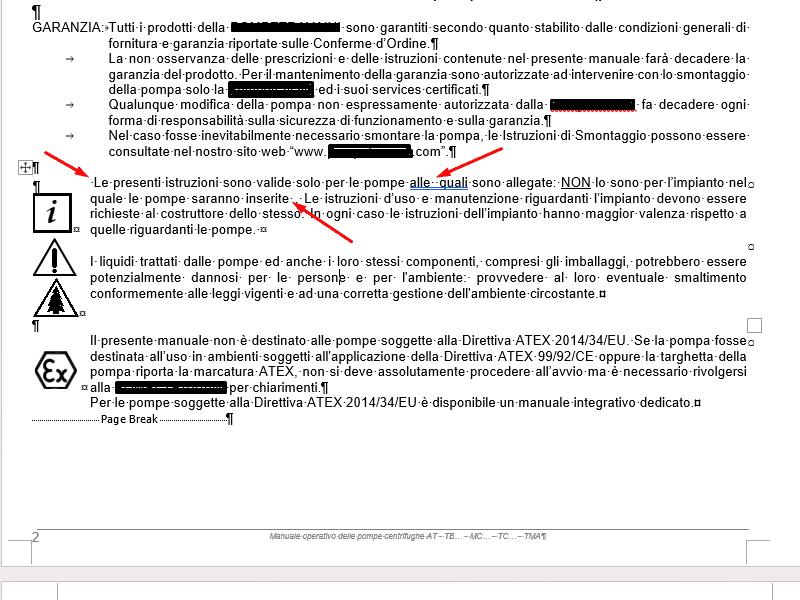
Typographical errors
Double spaces, misplaced punctuation, and inconsistent paragraph indentation affect readability, segmentation accuracy, and post-editing efficiency. Managing white space is also crucial for visual clarity and layout efficiency, especially when preparing documents for translation.
The attached image shows examples of typographical errors, specifically spacing and punctuation mistakes, unnecessary hyphenation, and incorrect formatting.
Broken sentences
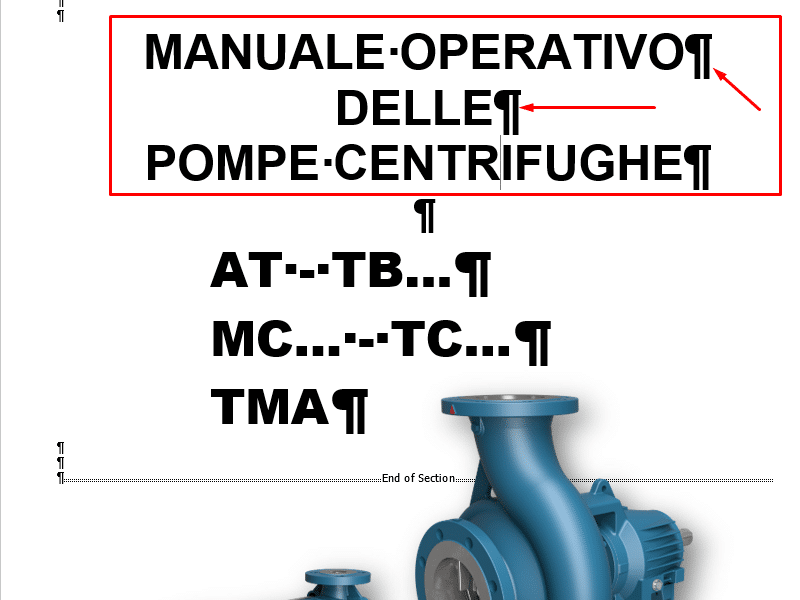
Incorrect segmentation or fragmented sentences cause translation inaccuracies and inconsistencies. Text length and formatting can vary widely between languages, which impacts the DTP process and may require additional adjustments to maintain proper structure.
The attached image shows an example of “broken sentences,” which is a common issue encountered in desktop publishing (DTP). Specifically, this refers to text segmentation, where lines or sentences unintentionally break due to improper formatting or layout constraints, resulting in an awkward and incorrect presentation of the content. This image shows unnecessary paragraph markers (¶) indicating improper line breaks and disjointed words.
Incorrect hyphenation
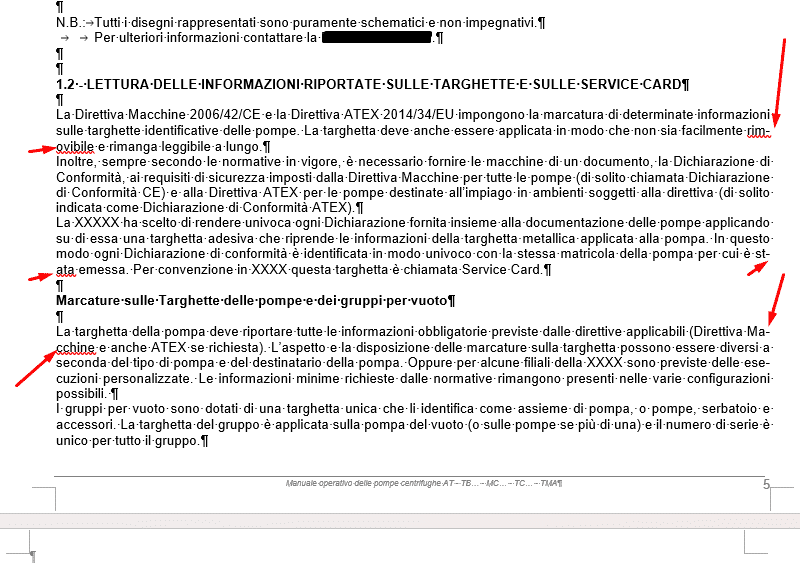
Random or improper hyphenation alters word meanings, confusing translators and CAT tools. Proper hyphenation ensures clarity and maintains intended meanings.
The image shows examples of incorrect hyphenation, where words are improperly broken across lines, negatively impacting readability and document clarity. This issue often arises from the limitations of basic word processors or improper text management practices.
Improper page breaks
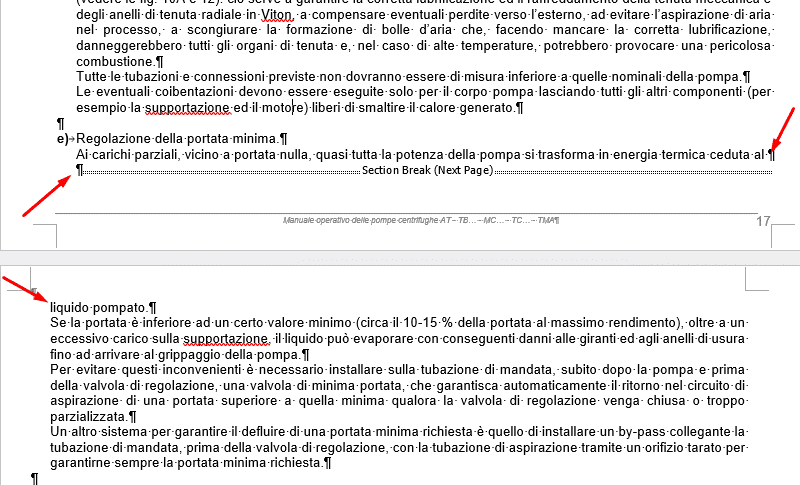
Page breaks within sentences or phrases can fragment text in CAT tools, leading to mistranslations or omissions.
Here’s another example wherein the attached image illustrates improper page breaks, where text is awkwardly split across pages, resulting in isolated headings or partial paragraphs appearing at the beginning or end of a page.
Formatting issues in tables
Poorly structured tables, merged cells, inconsistent column widths, or misaligned text cause translation errors or data misrepresentation. Standardized tables enhance accuracy and readability.
This image illustrates formatting issues in tables, specifically inconsistent alignment, unnecessary paragraph marks within table cells, irregular spacing, and text overflow.
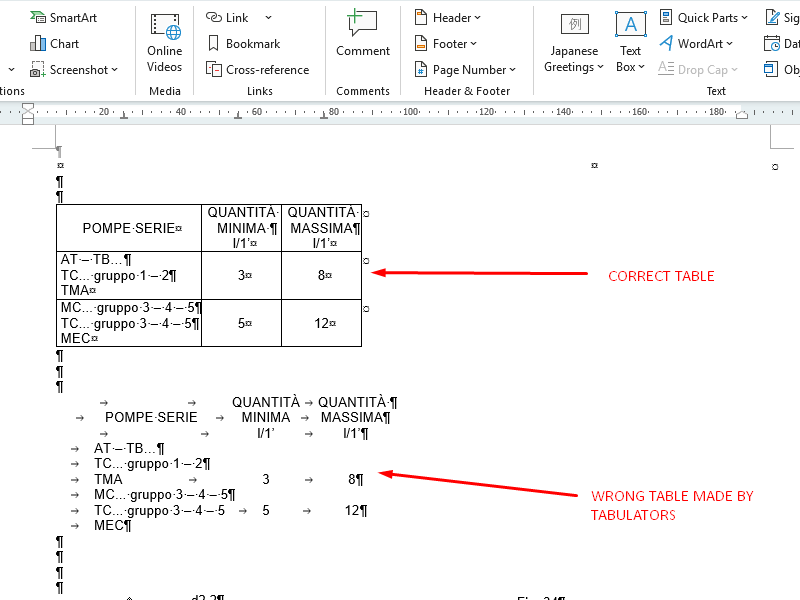
Tabbed columns in charts
Poorly structured tables, merged cells, inconsistent column widths, or misaligned text cause translation errors or data misrepresentation. Standardized tables enhance accuracy and readability.
This image illustrates formatting issues in tables, specifically inconsistent alignment, unnecessary paragraph marks within table cells, irregular spacing, and text overflow.
Conclusion
Proper file preparation using professional desktop publishing (DTP) services is more than a technical necessity, it’s a strategic advantage when it comes to your global, multilingual documentation requirements
Better-prepared files result in smoother translation processes, reduced costs, and high-quality translations, positively impacting your engagement across multiple target markets.
Have any questions about File Preparation? Let’s get in touch here.
Frequently Asked Questions
Desktop publishing (DTP) services involve creating, formatting, and managing visual content using specialized software on desktop computers.
In the context of translation workflows, DTP services specifically include preparing and adjusting documents, so they are optimized for translation tools, ensuring content consistency, readability, and compatibility with computer-aided translation (CAT) tools. These services help produce professional-quality documents, graphics, and multimedia materials suitable for both print and digital distribution, no matter the language.
CAT (Computer-Aided Translation) tools play a crucial role within the scope of desktop publishing services because they enable translators to work more efficiently on large translation projects. These tools help maintain consistency across multiple languages by leveraging translation memories and managing terminology. However, for CAT tools to function optimally, files must be properly prepared and formatted, a key responsibility of desktop publishing specialists. Without proper file preparation, issues such as unclean tags, broken sentences, and inconsistent formatting can arise, which hinder CAT tools' ability to segment and process text accurately.
Your company does not need to be directly involved in the DTP process but should be available to provide any necessary information or clarifications when needed. This ensures that the desktop publishing team can complete their work efficiently and deliver a final product that meets your quality standards and project requirements.
Yes, File Preparation is applicable to source files in any language. Professional desktop publishing teams are equipped to manage and optimize documents regardless of the language, ensuring that layouts, formatting, and content are accurately prepared for the translation process across different languages.
How can we help?
Tell us what you need and we’ll get back to you with the solutions.