SDH subtitles for d/Deaf and hard-of-hearing viewers
If the audio carries meaning, the subtitles need to carry it too.
Subtitles for d/Deaf and hard-of-hearing viewers (SDH) make multimedia content accessible when the viewer cannot rely on the soundtrack. DEMA combines transcription, dialogue, speaker information, relevant sound cues, synchronization and readability review in one accessibility-focused workflow.
What SDH adds
Dialogue
Speaker identification
Relevant sound effects
Music / audio cues where needed
SDH communicates information a hearing viewer receives from the soundtrack, not only the spoken words.
What makes SDH different
Accessibility requires more than a translated dialogue track.
Standard subtitles usually assume the viewer can still hear who is speaking and what is happening off-screen. SDH has to make relevant audio information visible.
Speaker identification
Clarify who is speaking when that information is not obvious from the image.
Sound effects
Include non-speech sounds that change meaning, action or emotional context.
Music and audio cues
Represent relevant musical or audio information where it matters to comprehension.
Readable timing
Synchronise captions so viewers can read the text while following the visual content.
Where SDH applies
Accessible video is relevant far beyond entertainment.
We create SDH subtitles for educational, corporate and entertainment content, wherever viewers need to follow both the dialogue and the sound.
Educational videos
E-learning modules
Corporate presentations
Training videos
Product videos
Entertainment content
Films
Television
Streaming content
Public information videos
The SDH workflow
Accessibility decisions are made in context with the video.
01
Transcribe the complete audio
Capture dialogue and identify non-dialogue information that may be relevant to comprehension.
02
Define SDH conventions
Agree speaker labels, sound descriptions, music treatment, punctuation and formatting rules for the project.
03
Translate where multilingual
Adapt both dialogue and relevant audio information for the target-language audience.
04
Synchronise and segment
Time the captions to speech, scene changes and viewer reading requirements.
05
Review accessibility and readability
Check the SDH track in context. Where appropriate, we work with associations supporting d/Deaf and hard-of-hearing viewers to test accessibility and readability.
Benefits for the viewer and the organisation
Accessible captions make information available on equal terms.
Audience reach
d/Deaf and hard-of-hearing viewers can access information that would otherwise exist only in the soundtrack.
Engagement & retention
Readable, well-timed captions reduce the effort required to follow the content.
Inclusive communication
Accessibility becomes part of the publication specification rather than an optional extra.
EAA context
The European Accessibility Act has been enforceable since 28 June 2025 and is one driver for organisations reviewing accessible digital content.
SDH vs other subtitle outputs
Choose the track based on what information the audience can access without audio.
Output
Primary purpose
Includes non-dialogue audio?
Translated subtitles
Bridge a language gap for spoken dialogue.
Usually limited.
Closed captions
Make speech and relevant audio visible, typically switchable on/off.
Often yes, depending on specification.
SDH
Provide an accessibility-focused subtitle track for d/Deaf and hard-of-hearing viewers.
Yes, when relevant to understanding.
Events and insights
Sharing our accessibility expertise with the industry.
Our team speaks at conferences, writes for industry media and runs workshops on plain language, accessibility and inclusion.
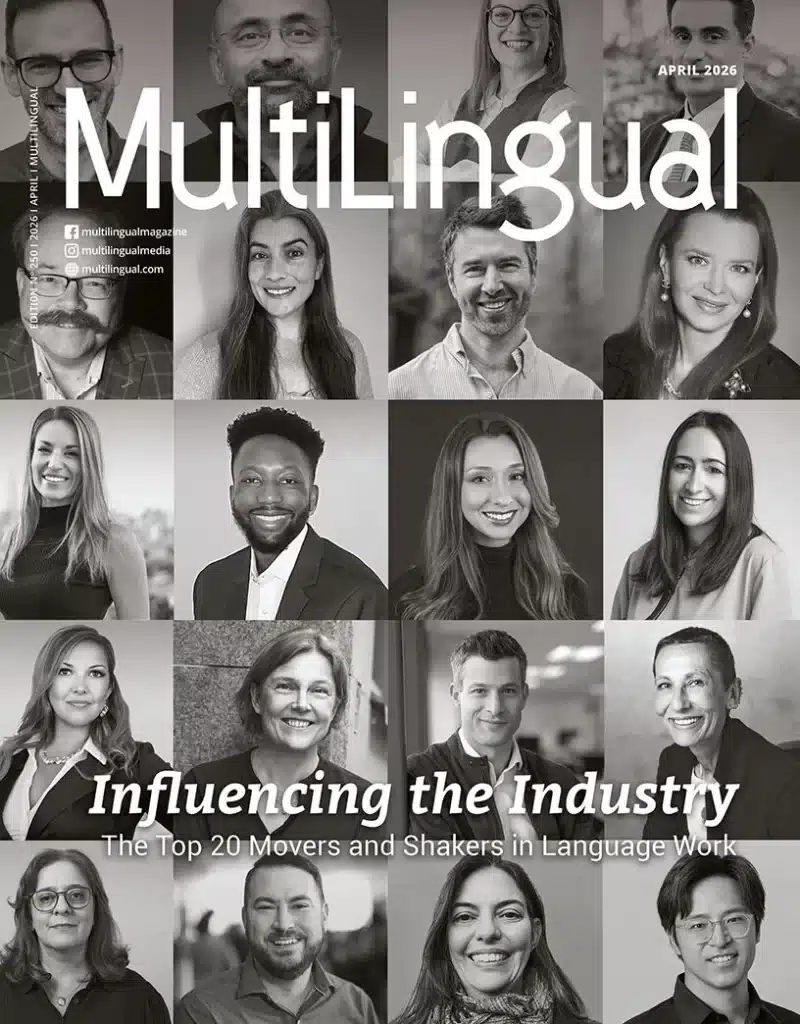 Article · MultiLingual magazine, April 2026
Influencing the Industry
In the April 2026 issue, Milena Spelta Parenti is featured among language industry influencers, explaining why accessible and inclusive language is about removing barriers.
Read the article ↗ Workshop · Torino Film Festival 2025
Lo spettacolo per tutti: inclusione e innovazione sul palco e sullo schermo
Milena Spelta Parenti took part in this workshop on making theatre and film accessible to every audience, with inclusive and innovative approaches on stage and on screen.
View the programme ↗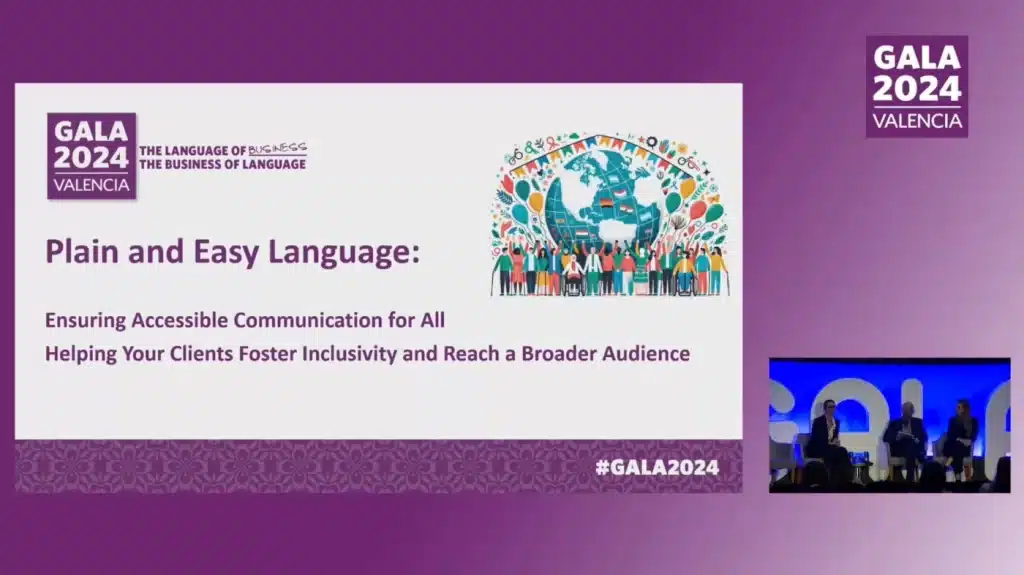 Conference talk · GALA 2024 Valencia
Plain and Easy Language: ensuring accessible communication for all
Milena Spelta Parenti and Jovana Maravic share how we simplify language for specific audiences, drawing on the plain and easy language projects of the Spanish company DEMA acquired in 2022.
Watch the talk ↗
Client voices
Long-term partners, in their own words.
Manufacturers, agencies and specialist firms across Europe rely on us for documentation that has to be right in every market.
“

We have been working with DEMA for a few years now on the translation of manuals: they are a great partner – professional, fast, and efficient, with a team of helpful and kind people. Our native-speaking dealers have also praised the quality and accuracy of the translations.
Michela R.
FMB S.r.l. · Italy
“
The advertising agency that follows us called me to tell me that the layout of the brochures that DEMA SOLUTIONS translated was perfect, he added that the translations never come this way, neither from us nor from their other clients. They were very satisfied.

Fernanda B.
Bonino S.r.l. · Italy
“
DEMA Solutions is a dynamic service provider that responds to our needs and thus puts its customers first. The cooperation with the staff is a pleasure and leads to success.
Tomislav M.
Tanner AG · Germany
“
Our collaboration with Dema has made it possible for us to look at the ‘translation issue’ as nothing more than a formality. Giardina Group is an engineering company that specializes in the design and production of innovative surface finishing and coating technologies. We export 90% of our production, and our ability to communicate with our customers in their own language – by providing clear, precise and professional documents – is a significant competitive advantage and an essential part of the high-quality service for which we are known. Our collaboration with Dema has proven to be of immense value: they are an attentive, reliable partner who responds quickly to our needs, even in ‘emergency’ situations.

Luca R.
Giardina Group · Italy
“
We have had a fruitful long-term cooperation with Link-Up. Over the years, we have put in a lot of hard work and have really made a name for ourselves as an international player in the clothing industry. It has been a non-stop journey, and the quality of multilingual communication in different contexts and for different services has been and continues to be a key strategic factor. Let’s keep up the good work together!
Matteo L.
Teddy Group · Italy
Link-Up is a DEMA Solutions company
“
Translations of outstanding quality, always delivered on time, with professionalism and great availability. As a company operating in many countries worldwide, it is crucial for us to have a reliable and competent translation service provider we can depend on. The specific language requirements of the sector in which we operate are always met.
Elisa C.
TricoBiotos S.p.A. · Italy
“
Lilly and Claudio are first of all friends, but they are also highly professional partners in the field of translation services. Always available and punctual, they have been our go-to for over 25 years for our international customers, who always praise the quality of our work. Translation is about more than just switching from one language to another, it’s about capturing the essence of the product and tailoring it to the target audience. Thank you Link-Up!!

Vincenzo C.
Promos S.n.c. · Italy
Link-Up is a DEMA Solutions company
“
For several years now, we have relied on LINK-UP for the translation of texts for the websites we create and for writing copy for advertising campaigns. The staff and owners of LINK-UP are always very kind and professional. A guarantee of quality.
Denis V.
Adriaweb Strategie Digitali · Italy
Link-Up is a DEMA Solutions company
“
When I first came into contact with REM Traduzioni more than 10 years ago, our roles were reversed. They were our client and commissioned us to develop their company website. We soon began to involve Elisabetta and Gloria in the projects we manage for our customers. Our collaboration has blossomed over time, thanks to their ability to deliver a consistently high-quality, professional service in every situation. REM Traduzioni has always been the partner of choice for us when it comes to multilingual communication.
Giacomo D.
Advertendo Srl · Italy
REM Traduzioni is a DEMA Solutions company
“
I got to know REM Traduzioni a few years ago when I joined the Ferretto Group. Elisabetta and Gloria were already trusted suppliers to the Ferretto Group and after the first few days I knew I would not be disappointed. The quality of the translations provided, the professionalism of the team, and their willingness to take on even the most urgent and complex projects make REM Traduzioni an invaluable partner on which we can rely to develop all our communication projects.

Annachiara B.
Ferretto Group SpA · Italy
REM Traduzioni is a DEMA Solutions company
“
I think I can say that REM Traduzioni has grown with us. We were one of their first customers over 30 years ago, and our ongoing relationship, built on complete trust and mutual respect, has evolved into a true partnership. Elisabetta and Gloria are our trusted translation service providers that we rely on for all of our translation needs and we consider them an integral part of our team.

Alessandro B.
Ufficio Veneto Brevetti · Italy
REM Traduzioni is a DEMA Solutions company
“
REM Traduzioni is our firm’s partner of choice in the field of language services. We rely on REM for some of our most sensitive and important projects and they always deliver on time and with professionalism.
Alessandro C.
Partner – BTLAWS · Italy
REM Traduzioni is a DEMA Solutions company
“
We are happy with your service, which we consider professional and fast
Antonella T.
Rossi & Rivieri · Italy
Questions
The right SDH specification depends on the audience and platform.
Can SDH be multilingual?
Yes. The dialogue and non-dialogue information can be localised into target languages while preserving accessibility conventions.
Do all sounds need to be captioned?
No. The goal is to include sounds that are relevant to understanding, context, action or emotional meaning, not to describe every audible event mechanically.
Can you create SDH from a video with no script?
Yes. The workflow can begin with full transcription and audio analysis before SDH segmentation and timing.
Can SDH be delivered as a separate file or burned into the video?
Yes. Delivery can be planned for the platform, including separate subtitle/caption files or encoded output where required.
Send the video and the publication platform.
We can define the SDH conventions, target languages, delivery format and review path around how the audience will actually watch the content.
Talk to DEMA