How a Style Guide Builds Consistent Multilingual Content
In 2026, with AI-guided translation tools reshaping workflows and regulatory pressure intensifying across industries like life sciences and finance, having a robust style guide isn’t optional, it’s foundational.
When your company operates in multiple markets, every piece of content: from product manuals to investor reports, represents your brand. A single inconsistent translation can erode trust, create compliance risks, or simply confuse your audience. That’s where a translation style guide becomes essential.
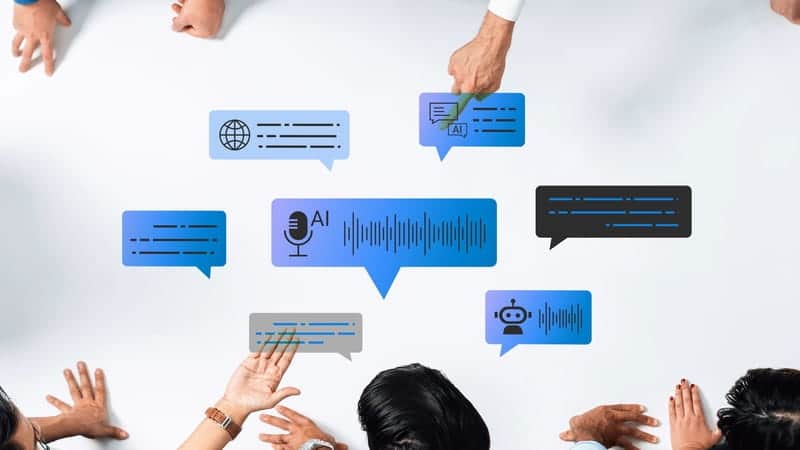
A translation style guide is a comprehensive rulebook that defines how your brand communicates in each target language. It covers tone, grammar, terminology, formatting, and cultural adaptation rules to maintain consistency and deliver a consistent message across markets. It also specifies what to avoid so to stay aligned with your brand’s identity and ensures cultural nuances are respected throughout the localization process.
We work with mid- to large-sized organizations navigating complex multilingual environments. Our clients in regulated sectors need consistent, compliant translations that protect their brand’s identity while meeting strict documentation standards. Research from CSA shows that 76% of global brands using style guides report fewer translation errors, and companies with brand consistency across languages see up to 23% higher brand recognition. These numbers aren’t abstract. They translate directly into customer trust, faster market entry, and reduced legal exposure.
This article provides practical, high-level guidance for building a translation style guide that works for both human translators and AI-assisted systems. We’ll cover the key elements every guide should include, a step-by-step creation process, and how to integrate your guide into real workflows across translation, MTPE, DTP, accessibility, and inclusive language initiatives.
What is a Translation Style Guide? (and How It Differs from a Corporate Style Guide)
A translation style guide is a language-specific rulebook that defines tone, grammar, terminology, and formatting preferences for translated content. Unlike general writing guidelines, it provides explicit instructions that help linguists render source text into a target language while preserving your brand voice and meeting local expectations
Most companies already have a corporate style guide, typically created by marketing or communications teams that covers brand messaging, visual identity, and writing style in the original language. A translation style guide expands on this foundation, adapting those principles for localization needs. It addresses questions that never arise in monolingual content: How formal should we be in German? Do we use European or Brazilian Portuguese? How do we handle gendered nouns in French marketing copy?
Translation style guides are inherently language-specific. A guide for German content targeting Germany will differ from one for Swiss German audiences. Brazilian Portuguese requires different cultural considerations than European Portuguese. Each target market deserves its own tailored rules.
In real workflows at DEMA Solutions, these guides serve multiple users:
User Type | How They Use the Style Guide |
Human translators | Reference for tone, terminology, and formatting decisions |
MTPE linguists | Benchmark for evaluating and correcting machine translation output |
QA reviewers | Checklist for consistency and compliance verification |
Project managers | Briefing tool for new linguists and quality checkpoints |
Unlike static PDFs buried in shared drives, modern translation style guides are living documents. They’re stored in TMS platforms or shared repositories, updated regularly as brands evolve, new products launch, or regulatory requirements shift. At DEMA Solutions, we treat these guides as linguistic assets that grow alongside our clients’ businesses.
Why Your Business Needs a Translation Style Guide in the Age of AI

The translation process has fundamentally changed between 2024 and 2026. Pure human translation is no longer the default for most companies. Instead, hybrid workflows, combining machine translation, AI-assisted review, and human expertise have become standard. This shift makes style guides more important, not less.
AI tools and MT systems don’t intuit your brand. They need explicit instructions: What’s the appropriate tone for your financial disclaimers? Which terms should never be translated? What inclusive language policies apply in Spanish? A well-structured style guide provides these clear instructions through prompts, configuration files, and integration with your translation tools.
The concrete benefits show up quickly in project metrics:
- Fewer revisions: When MT engines follow style rules, human reviewers spend less time correcting basic issues
- Shorter review cycles: Predictable quality means faster turnaround on technical documents and marketing campaigns
- Consistent brand voice: Product UIs, legal notices, and campaign materials all sound like they come from the same company
- Reduced training time: New linguists and vendors can get on the same page faster
For DEMA Solutions clients in compliance-heavy sectors, standardized style guides deliver particularly strong results. Consider pharmaceutical documentation where regulatory phrases must be rendered consistently across all EMA or FDA submissions. Or financial services content where risk warnings require precise, legally vetted language. A style guide locks in these critical decisions, preventing costly inconsistencies that could trigger regulatory scrutiny.
The ROI drivers are measurable: reduced rework, less time explaining preferences to new vendors, smoother DTP and multilingual SEO alignment, and a more reliable global markets presence. Industry data suggests localization projects with proper style guidance achieve 2.5x higher ROI than unguided projects: a number that compounds across dozens of languages and thousands of documents.
Core Elements to Include in Your Translation Style Guide
This section serves as your checklist for building a comprehensive translation style guide. Each element below should be adapted based on your industry, content types, and target markets. We’ll walk through the essential categories with concrete examples drawn from DEMA Solutions’ experience serving B2B clients in regulated industries.
- Clarity and Simplicity of Expression
- Using simple, direct sentence construction to make the text easy to understand and translate.
- Avoiding complex or nested sentence structures that can confuse translators and readers alike.
- Preferring active voice over passive voice to create more engaging and straightforward sentences.
- Maintaining a balanced sentence length, steering clear of sentences that are either too long or too short, to enhance readability and translation accuracy.
- Explicitness and Reduced Ambiguity
- Avoid pronouns in favor of explicit nouns to reduce confusion about the subject or object in a sentence.
- Use precise and consistent terminology, reinforcing the importance of adhering to approved terms in the translation glossary.
- Limit abbreviations and acronyms unless they are clearly defined on first use or are widely recognized within the target audience.
- Structural Readability and Logical Flow
- Breaking instructions into clear, ordered steps to guide users through complex processes or decisions.
- Using lists, bulleted or numbered to separate actions, examples, and ideas for better readability.
- Consistency in Language Mechanics
- Consistent use of punctuation: Ensure that punctuation marks such as commas, periods, colons, and semicolons are used uniformly throughout the translated content according to the conventions of the target language.
- Consistent quotation mark style: Specify whether to use single (‘ ’) or double (“ ”) quotation marks in the target language, and apply this style consistently across all translations.
- Correct grammar, syntax, and tense usage: Define rules for grammar, sentence structure, and verb tenses to maintain clarity and preserve the intended meaning and tone in the target language.
- Neutral and Globally Scalable Language
- Avoiding idioms, jargon, and culturally specific expressions that may not translate well or could be misunderstood in different regions.
- Avoiding full sentences in capital letters, which can be perceived as shouting or aggressive in many cultures.
- Using full words instead of symbols or special characters to maintain clarity and prevent misinterpretation by both human translators and AI translation tools.
- Translation-Friendly Formatting and Layout
- To ensure smooth localization and maintain consistency across different languages and markets, your translation style guide should undergo proper DTP file preparation such as:
- Avoiding manual line breaks in headings, tables, and running text to prevent layout issues after translation.
- Using automatically generated bullet points instead of manual symbols for lists to maintain uniformity.
- Applying proper heading styles rather than manual formatting to enable easier style adjustments.
- Allowing sufficient space for text expansion after translation, as some languages require more characters.
- Avoiding manual hyphenation, which can disrupt readability and translation accuracy.
- Using real tables instead of spacing or tabs to ensure correct data presentation.
- Favoring language-neutral images with editable text to facilitate localization without graphic redesign.
A well-crafted style guide not only streamlines the translation process but also enhances communication effectiveness, reduces errors, and fosters trust with your global audiences. Investing time and effort into these core elements will empower your team, both human translators and machine translation tools, to deliver content that truly resonates, strengthens your brand identity, and supports your business growth worldwide.
Terminology Glossaries: The Essential Companion to Your Style Guide
A translation style guide alone isn’t enough. It must be paired with well-structured terminology glossaries and translation memories to deliver consistent results. Think of the style guide as the “how” and the glossary as the “what.”
A terminology glossary is a curated list of approved source-target term pairs with supporting metadata: definitions, context examples, part of speech, status (approved/pending/deprecated), owner, and review date. While a style guide might say “use formal medical terminology,” the glossary specifies exactly which terms to use.
Glossaries reduce ambiguity in areas where precision matters most:
- Legal clauses where a single word change affects meaning
- Financial instruments with specific regulatory definitions
- Technical components where consistency prevents confusion
- Medical terminology where accuracy affects patient safety
DEMA Solutions creates and maintains glossaries at multiple levels for clients in regulated industries: project-level glossaries for specific campaigns, product-line glossaries for ongoing documentation, and corporate glossaries for enterprise-wide consistency.
What to Include in a Terminology Glossary
Glossaries should capture every term where consistency matters:
Term Category | Examples | Metadata Needed |
Product names | Brand names, feature names, model numbers | Status, do-not-translate flag |
Process terms | Workflow stages, procedure names | Definition, usage context |
Compliance terms | Regulatory phrases, legal disclaimers | Approver, source document |
UI labels | Button text, menu items, error messages | Character limits, platform |
Industry terms | Industry specific terminology | Source reference, related terms |
Each entry should include a definition and short usage notes based on real sentences from your documentation. This context helps translators apply terms correctly, especially when words have multiple meanings.
Metadata requirements differ by sector. Life sciences glossaries need approval from medical directors for indications and contraindications. Financial glossaries require sign-off from compliance for risk-related terminology. Manufacturing glossaries may need engineering validation for technical specifications.
Example glossary entry (fintech):
Term (EN): Derivative instrument Term (IT): Strumento derivato Definition: A financial contract whose value derives from an underlying asset, index, or rate Context: Used in risk disclosures and product descriptions Status: Approved Approver: Legal/Compliance team Last reviewed: January 2026
How to Build and Maintain Glossaries for Human and AI Translation
Building a glossary starts with extraction. Use terminology extraction tools, TMS features, and manual curation by subject-matter experts to identify candidate terms from existing corpora. Look at high-frequency terms, branded language, and any terminology that has caused inconsistency in past projects.
Initial term lists require validation:
- Bilingual experts in each market review proposed translations
- Subject matter experts verify technical accuracy
- Legal or regulatory teams approve compliance-related terms
- Brand teams confirm marketing language alignment
Once approved, terms enter the glossary as “official”, the source for all future projects.
Glossaries feed both human translators (through CAT tools that surface approved terms during translating content) and AI/MT engines (through terminology injection and custom prompts). This dual use makes glossary quality even more critical: errors propagate across both workflows.
Maintain glossaries with regular review cycles:
- After major product launches or rebrands
- When entering new markets with different language variants
- Following regulatory changes that affect industry terminology
Remove obsolete terms, add new ones, and update context notes. A glossary that reflects your current products and messaging serves translators far better than an outdated reference that requires constant double checking.
How DEMA Solutions Can Support Your Translation Style Guide Strategy
At DEMA Solutions, we combine linguistic expertise, sector knowledge, and technology to design and maintain translation style guides that work in practice, not just on paper.

Our support spans the full lifecycle:
Service | Description |
Style Guide creation | Provided template to define writing and formatting rules |
Terminology extraction | Automated and manual identification of key terms from existing content |
MTPE-specific guidelines | Rules optimized for machine translation post-editing workflows |
DTP alignment | Formatting specifications for desktop publishing consistency |
Ongoing governance | Quarterly reviews, version management, and update coordination |
We work with mid- to large-sized organizations across Europe and beyond, helping align multilingual content with both regulatory requirements and brand expectations. Whether you’re a life sciences company managing documentation in 20+ languages or a financial services firm expanding into new markets, our localization experts tailor approaches to your specific context.
Think of your translation style guide as a strategic asset, not a one-time document. It shapes how different audiences experience your brand, how efficiently you save time and save money on localization efforts, and how effectively your communication lands across many languages.
Ready to strengthen your multilingual content strategy?
Contact DEMA Solutions to schedule a consultation. We can assess your current linguistic assets, identify gaps, or help you create a translation style guide from scratch. If you’re already managing translated content across markets, request a review of your existing guides, we’ll identify opportunities for improvement and help you build a foundation for consistent, high-quality localization.
Start with a pilot localization project using a new or updated guide. See the difference that structured style guidelines make in quality, speed, and brand consistency.
FAQs
When do I know if I need a style guide?
What is a glossary?
How does a style guide differ from a glossary?
What are the benefits of translation style guide?
Tell us what you need and we’ll get back to you with the solutions.