Efficient Translation Workflow Management That Helps You Get Results
TL;DR: Translation workflow management transforms how businesses handle multilingual content by combining smart technology, streamlined processes, and quality controls. Key benefits include 40-60% faster project delivery, reduced costs through automation, improved accuracy with translation memory tools, and scalable systems that grow with your business. Success comes from integrating machine translation, human expertise, and project management best practices into one cohesive workflow.
Introduction to efficient translation

Most businesses struggle with translation chaos: missed deadlines, inconsistent quality, and skyrocketing costs that eat into profits. Efficient translation workflow management solves these problems by creating systematic approaches that works. The translation process goes beyond converting words from one language to another. It demands careful coordination between people, technology, and quality checks to deliver results that matter. Considering the target language is essential to ensure translations are accurate, natural, and culturally appropriate.
Translation workflows typically vary from one business to another, yet they all share a common goal: to deliver you a high-quality translated content.
A well-structured translation workflow serves as the backbone of successful multilingual content creation and global documentation. When businesses implement effective workflow management strategies, they can save time, reduce costs, and consistently deliver accurate translations that resonate with their target audience. The complex process of managing translation projects demands sophisticated coordination between human resources, technology, and quality assurance measures.
Modern translation workflow management encompasses planning, coordination, and control of the entire translation process from initial document receipt to final delivery. Project management principles play a vital role in ensuring that translation projects meet deadlines, stay within budget, and achieve the desired quality standards. Organizations that master these workflows gain a significant competitive advantage in global markets.
What is a translation workflow?
Translation workflows represent the systematic series of processes involved in translating texts into multiple languages. Each workflow typically includes key steps such as vendor assignment, file preparation, translation, quality assurance, and final delivery.
The foundation of effective translation workflow management lies in recognizing that every project has unique requirements. Some projects may require rapid turnaround times, while others prioritize absolute accuracy over speed. Business needs vary significantly depending on the industry, target market, and content type. Companies must design flexible workflows that can accommodate different requirements without sacrificing quality or efficiency.
A typical translation begins with source content analysis and preparation. This initial phase involves evaluating the material to be translated, identifying any technical challenges, and determining the most appropriate approach. It then progresses through translation, review, quality control, and final delivery phases. In the translated content delivery stage, translations are formatted, converted, and organized before being handed over to content owners, highlighting the importance of proper content management and automation in multilingual content workflows. Each stage requires careful management to ensure smooth transitions and maintain project momentum. In-context editing allows translators to see how content appears in its final layout, ensuring appropriate formatting during translation.
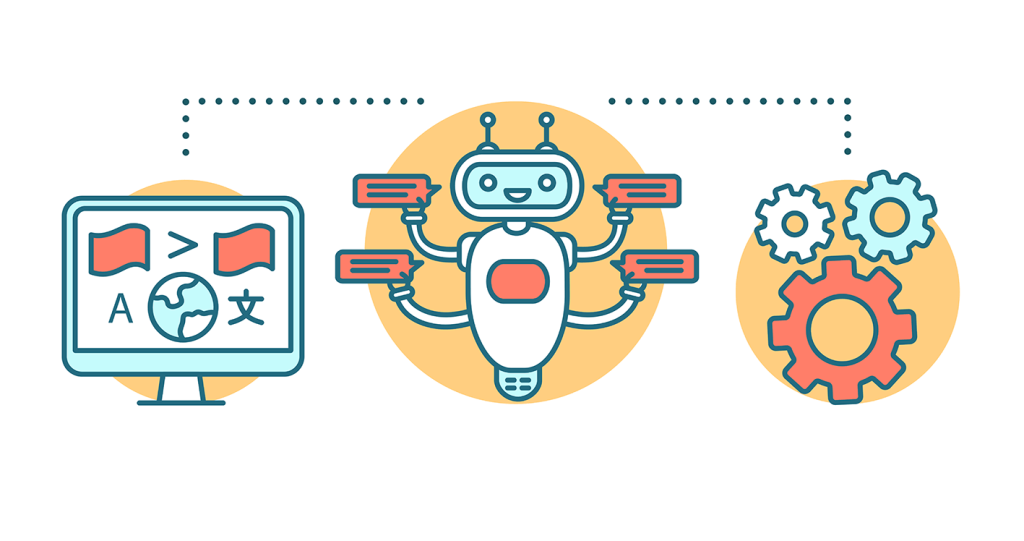
How do machine translation and integrated processes benefit translation workflows?
- Translations for manufacturing companies requiring technical documentation such as user manuals, instruction guides, and product specifications.
- Translations for medical device manufacturers who need to comply with Medical Device Regulation (MDR) standards and ensure accuracy and regulatory adherence.
- Translations for banks and financial institutions that demand precise and secure handling of sensitive documents, including compliance reports, contracts, and customer communications.
However, these types of translations should not rely solely on machine translation. A combination of machine translation with human review and editing represents the best practice for many organizations. These approaches leverage the speed of automated translation while ensuring that human expertise addresses nuanced language requirements, cultural considerations, and quality standards.
Machine translation combined with human review is known as machine translation post-editing (MTPE). Tools like Google Translate are often integrated as built-in machine translation engines within CAT tools and translation management systems (TMS) to provide initial translations that human translators then carefully post-edit. This professional process differs significantly from simply using the Google Translate web and mobile app, as it is part of a structured workflow designed to ensure higher accuracy and consistency in the final translated content.
How does a Translation Management System optimize workflows?
A TMS centralizes all translation-related tasks, resources, and communications in one platform, eliminating manual steps and reducing errors. It automates project creation, file routing, vendor management, and progress tracking, which significantly saves time and effort. Therefore, optimizing workflows without a translation management system, also known as TMS, can have pitfalls.
By integrating translation memory and terminology databases, a TMS ensures consistency and reuses previously translated segments, cutting down repetitive work and costs. It supports hybrid workflows by combining machine translation with human editing to balance speed and accuracy. Furthermore, a TMS provides real-time visibility into project status, enabling efficient resource allocation and proactive issue resolution.
Overall, a translation management system streamlines the entire localization process, enabling organizations to deliver high-quality translated content faster and more cost-effectively, while scaling their translation projects as their global needs grow.
Other than a TMS, there are several established technologies designed to help businesses significantly reduce costs. Well-known and widely implemented translation tools include Translation Memories (TM) and Computer Assisted Translation (CAT) tools, among others, which also facilitate efficient management of translation workflows.
What is a Translation Memory?
A translation memory (TM) is a specialized database that stores previously translated text segments, such as sentences or phrases, which can be reused in future translation projects. By leveraging this technology, translators can avoid redundant work, maintain consistency across multiple documents, and accelerate the translation process.
Translation memories are integral components of computer-assisted translation (CAT) tools and are often integrated into translation management systems (TMS) to optimize workflows. This approach not only reduces costs and turnaround times but also helps ensure that translated content aligns with the target language’s cultural nuances and brand voice, ultimately enhancing the quality and efficiency of translation workflows.
What is a Computer Assisted Translation or a CAT Tool?
CAT tools encompass translation memory systems, terminology databases, and quality assurance features that collectively streamline the translation process. CAT tools have become indispensable components of modern translation workflow management systems. This powerful solution enhances translator productivity, improves consistency, and facilitates better collaboration across project teams.
Translation memory technology represents one of the most significant advances in translation workflow efficiency. By storing and reusing previously translated segments, translation memory systems eliminate repetitive work and ensure consistency across projects. This technology is particularly valuable for organizations with large content libraries or frequent updates to existing materials.
Organizations must evaluate different software options, consider integration requirements with existing systems, and develop training programs for their team members. This is why our translation services include providing or recommending translation memories and CAT tools, as these are valuable assets that help your business obtain the best results. When these tools are absent in a business, it is our delight to help you understand why adopting them is an indispensable approach.
Who manages an entire translation workflow?
Typically, a translation workflow is overseen by a project manager a.k.a a PM, acts as the central point of contact throughout the process. The assigned project manager is responsible for planning, coordinating resources, assigning tasks, monitoring progress, and maintaining communication between all stakeholders.
Translators and post-editors play critical roles in the workflow, handling actual translation and quality control tasks. Subject matter experts or reviewers may also be involved to ensure accuracy and adherence to industry-specific terminology and brand voice. Additionally, technology specialists or localization engineers manage the integration of translation software, automation tools, and technical aspects of file preparation and delivery.
Effective translation workflows require collaboration among all these participants, supported by translation management systems that facilitate task assignment, progress tracking, and quality assurance. By clearly defining responsibilities and leveraging appropriate tools, organizations can optimize their translation workflows to deliver accurate, timely, and culturally relevant translated content.
How does a project manager assign tasks and coordinate resources?
Effective task assignment represents a critical component of successful translation workflow. The process involves matching appropriate resources to specific project requirements while considering factors such as subject matter expertise, language pairs, availability, and quality standards. Proper task assignment can significantly impact project outcomes, affecting both efficiency and final quality.
This is why Project Managers serve as the crucial link in identifying the most suitable linguists for each specific translation project. Through continuous communication and collaboration with translators, they gain deep insights into individual linguists’ expertise, language proficiency, and subject matter knowledge. This ongoing interaction enables project managers to make informed recommendations, ensuring that each project is assigned to the best-qualified linguist. Additionally, modern translation management systems support project managers by providing detailed profiles and performance data, further enhancing task assignment accuracy and overall workflow efficiency.
To streamline this complex coordination, many organizations like ours use a Translation Management System (TMS). As mentioned above, this system centralizes the entire translation project, keeping all essential elements in one unified platform.
Modern workflow management systems provide sophisticated capabilities for task assignment and tracking. These tools enable an entire project management to quickly identify available resources, assess translator qualifications, and make informed assignment decisions. Automated assignment features can handle routine decisions while ensuring that complex projects receive appropriate human oversight.
The development of clear task assignment criteria helps ensure consistency and fairness in resource allocation. Organizations should establish guidelines that consider translator expertise, workload distribution, and client preferences. Regular evaluation of assignment effectiveness helps identify improvement opportunities and optimize resource utilization over time.
How can we overcome repetitive work challenges within a project management workflow?
Repetitive work represents one of the most significant efficiency challenges in managing translation workflows. Traditional approaches often require translators to handle similar content multiple times, leading to wasted effort and increased costs. Modern workflow solutions address this challenge through intelligent content reuse and automation technologies.
Translation memory and terminology management systems play crucial roles in eliminating repetitive work. By automatically identifying and reusing previously translated content, these systems allow translators to focus on new or modified material. This approach not only improves efficiency but also ensures consistency across related projects and content updates.
Workflow automation extends beyond simple content reuse to encompass entire process segments. Automated quality checks, file processing, and project setup procedures reduce manual overhead while improving accuracy. The cumulative effect of these improvements can dramatically enhance overall workflow efficiency and reduce project costs.
How can strategic translation planning drive global growth?
Strategic translation planning goes beyond simply translating documents; it aligns translation efforts with overarching business goals to effectively reach international markets. Integrating advanced translation technology systems centralizes workflows, automates repetitive tasks, and enhances collaboration among translators, editors, and project managers, maintaining consistency and preserving brand voice across languages.
Leveraging hybrid workflows that combine machine translation tools and artificial intelligence with human expertise accelerates the translation process without compromising quality. Strategic planning also addresses the delivery of translated content, ensuring smooth integration with software development cycles and marketing campaigns. Staying organized and managing files efficiently reduces turnaround times, enabling businesses to enter new markets swiftly and cost-effectively.
As companies expand their multilingual content volume and complexity, scalability becomes critical. Automated workflows embedded within translation management systems allow organizations to handle large translation volumes while maintaining accuracy and controlling costs. Ultimately, strategic translation planning serves as a key driver of global growth by uniting content prioritization, technology integration, and process optimization to deliver high-quality translated content consistently and efficiently.
What are the limitations of traditional translation workflows?
Traditional translation workflows often rely heavily on manual processes that create bottlenecks and limit scalability. These legacy approaches typically involve extensive email coordination, file sharing through basic systems, and limited visibility into project status. As project complexity and volume increase, these limitations become increasingly problematic.
Manual workflow management creates room for expensive translation costs, missed deadlines, limited data storage, and terminology inconsistencies. Traditional approaches often lack adequate quality control mechanisms, making it difficult to ensure consistent output across projects, especially with high-volume documents.
Organizations relying on traditional workflows frequently struggle with resource management and capacity planning. Without automated tracking and reporting capabilities, project managers cannot easily identify resource constraints or optimization opportunities. These limitations ultimately impact both operational efficiency and competitive positioning in the global marketplace. Without standardized processes, project outcomes and client satisfaction can vary widely, leading to inconsistencies and potential setbacks.
How can we ensure the quality of every translated content delivered?
Multi-layered quality control approaches typically yield the best results for translated content. These systems combine automated quality checks with human review processes to identify and address potential issues before delivery.
This involves QA checks with high-end translation QA tools like SDL Trados, which features a built-in QA checker to automatically detect errors, and Verifika, known for its comprehensive quality assurance capabilities. The integration of quality measures into workflow automation ensures that quality standards are consistently applied across all projects.
Quality encompasses not only linguistic accuracy but also cultural appropriateness, brand voice consistency, and technical correctness. Translated content quality represents the cornerstone of successful international communication strategies.
How can measuring success and continuous improvement enhance translation workflow management?

Organizations should establish key performance indicators that provide clear visibility into workflow effectiveness and highlight opportunities for improvement. For instance, our team leverages advanced business intelligence and reporting tools within our translation business management system to track performance of translation projects’ metrics over specific periods. Thanks to cutting-edge translation technology, we can continuously measure and analyze key data points, empowering data-driven decision-making that drives ongoing improvements and optimization in our translation workflow management.
Efficiency metrics typically focus on project completion times, resource utilization, and cost per word or project. Quality metrics address accuracy rates, client feedback, and revision requirements. Client satisfaction measures help ensure that workflow improvements translate into better customer experiences and business outcomes.
Conclusion
Streamlining translation workflow management represents a strategic imperative for organizations seeking to enhance efficiency, improve quality, and reduce costs in their international operations. The integration of proven workflow management principles with translation-specific requirements creates powerful capabilities that support global growth and competitive positioning.
By adopting best practices and leveraging appropriate technology solutions, businesses can achieve sustainable global growth through strategic translation workflow management. The commitment to excellence in workflow design and execution creates lasting competitive advantages that support international market expansion and customer engagement objectives.
Tell us what you need and we’ll get back to you with the solutions.