Top Strategies to Translate Technical Manuals with Less Costs
Translating technical manuals can be complex and demands precision. Whether you’re dealing with user guides, installation guides, or medical device instructions, accurate translations are essential for safety, compliance, and user experience. This article will walk you through top strategies to effectively translate technical manuals, ensuring clarity, consistency, and adherence to regulations.
Importance of Accurate Technical Manual Translations
Accurate translations of technical manuals are critical for user safety and product usability, making it highly important and non-negotiable.
In the manufacturing industry, even minor mistranslations can result in serious consequences, including product liability issues and legal actions. A misinterpreted instruction can lead to equipment misuse, resulting in accidents or operational failures. Language barriers in technical manuals can lead to workplace accidents or legal issues if not properly addressed through professional translation.
The impact of poor translations extends beyond safety risks. Companies can suffer significant damage to their reputation and profitability if their technical manuals are inaccurately translated. High-quality translations ensure that products are used correctly and safely. This is why companies that choose to invest in high-quality technical manual translations succeed. They ensure global user satisfaction and drive sustainable growth through collaborating with a translation agency that delivers quality translated documents.
Compliance with local regulatory requirements is equally crucial. Precise translation and language services support adherence to safety and legal standards across regions, thereby reducing the risk of costly non-compliance issues and the need for retranslation.
Achieving all this requires the expertise of professional technical translators. They play a crucial role in delivering clear, culturally adapted instructions, ensuring complex information is accurately conveyed in every target language. This not only improves the end-user experience but also reduces the need for customer support.
Leveraging Translation Technology Tools
If your company hasn’t yet utilized translation technology known as Translation Memory (TM) to translate technical manuals, now is an excellent time to start. TM has been a game-changer for global companies requiring translations. This powerful tool offers several key advantages:
Ensure consistent use of phrases and terminology across different manuals
Store and reuse previous translations
Allow faster and more consistent output
Enhance translation accuracy
Significantly reduce costs by reusing previously translated material
Translation Memory (TM) enables the reuse of previously approved and published content in ongoing projects, helping maintain consistent technical language while reducing costs. A TM can store from different file formats. It doesn’t store files themselves; it stores segments (usually sentences or phrases) extracted from source and target texts. The most commonly used in technical manuals are MS Word (.doc, .docx), PDF, Excel (.xls, .xlsx), PowerPoint (.ppt, .pptx) and more.
Additionally, integrating Machine Translation (MT) with Computer-Assisted Translation (CAT) tools is reshaping the landscape of technical document translation. CAT tools allow translators to have a unified workspace with essential features like translation memories, terminology databases, and automated quality checks — all designed to enhance consistency, speed, and accuracy.
Machine Translation can be used within these tools to generate draft translations, which are then reviewed through a process known as Machine Translation Post-Editing (MTPE). This hybrid model accelerates output while ensuring accuracy through human review. Companies that adopt this model benefit in productivity, consistency, and cost-efficiency.
How to Cut Costs When Translating User Manuals

Investing in professional technical translation services, especially for user manuals in multiple languages, signals a significant cost. However, leveraging technology-powered solutions helps companies control translation expenses while maintaining quality and compliance across global markets. That’s why we always recommend our clients make the most of translation technology tools. Here are some effective ways we’ve helped our clients reduce their translation costs without compromising quality or accuracy when translating user manuals:
1. Leverage Translation Memory (TM)
Translation memories help reuse previously translated content, minimizing redundant work. Over time, as more content is added, recurring phrases and technical terms can be recycled—reducing costs, decreasing workload, and improving consistency across both current and future technical document translation projects.
2. Integrate Machine Translation + Post-Editing (MTPE)
Machine translation, when combined with expert post-editing, offers a practical solution for large volumes of technical content. It allows faster delivery of draft content that is then professionally reviewed for accuracy, tone, and compliance.
This approach is especially valuable for manuals that contain repeated phrases, structured formatting, or standardized instructions. This is mostly common in manufacturing and engineering sectors.
3. Create and Maintain a Multilingual Terminology Database
A well-maintained terminology database ensures consistent use of technical terms across all user manuals and languages. By standardizing industry-specific vocabulary, it reduces confusion, shortens revision cycles, and accelerates translator onboarding. Key benefits include:
Avoiding costly misunderstandings and rework
Speeding up translation turnaround times
Improving regulatory compliance and product usability
4. Invest in a DTP Service like File Preparation
When files are well-prepared, it minimizes the risk of errors, reduces the time translators spend on formatting issues, and streamlines the entire translation workflow.
Technical manuals often contain complex layouts, embedded images, tables, and technical drawings. Preparing these files by removing unnecessary elements, standardizing formatting, and ensuring compatibility with translation tools enables translators to focus solely on the content. This preparation reduces time spent fixing formatting issues during or after translation and, most importantly, facilitates the effective use of TM and CAT tools, optimizing the overall translation process.
Want to Drastically Cut Translation Costs?
Most inefficiencies in translation begin before the translation even starts.
We’re working on something that will change that. Want to be the first to hear about it?
We’re working on something that will change that. Want to be the first to hear about it?
Professional Translators for Technical Manuals

While technology plays a significant role, the expertise of professional translators remains indispensable. Our technical translators are fluent in both the source and target languages and possess an in-depth understanding of the subject matter. With years of experience collaborating with professional linguists specialized in technical fields, we understand how crucial it is to deliver accurate translations that preserve both meaning and context.
Industries like manufacturing and medicine demand translators who are not only skilled linguists but also possess deep subject matter expertise. Professional technical translation services are essential for technical industries with complex documentation needs, ensuring that industry-specific terminology and requirements are met.
Ensuring Regulatory Compliance in Technical Manual Translations
Regulatory compliance in technical manual translations is non-negotiable, especially in highly regulated markets like the European Union. Technical translations must meet legal standards and language requirements to ensure product safety and market entry. This is particularly important for critical documents such as material safety data sheets in the manufacturing and automotive industries, where accurate and compliant translations are essential for meeting industry standards and regulatory adherence. Accurate translation of engineering documents, especially in aerospace and aviation sectors, is vital to ensure the correct transmission of complex technical content and compliance with industry regulations. Additionally, patent translations require specialized expertise to maintain regulatory compliance and technical accuracy for international patents.
Cultural adaptation is also crucial, not just for language but for visuals and use cases. This includes:
- Translating instructional text
- Adapting diagrams and interface visuals
- Modifying examples and references to match local expectations
Working with a translation provider who stays updated on regulatory requirements, such as CE marking or MDR, is essential to achieving full compliance and ensuring safe usage across markets. While this may seem like an indirect benefit, it’s a key advantage built into our professional technical translation services. For technical industries with complex documentation needs, it ensures that industry-specific terminology and regulatory standards are accurately met.
Translation of Technical Drawings and Diagrams
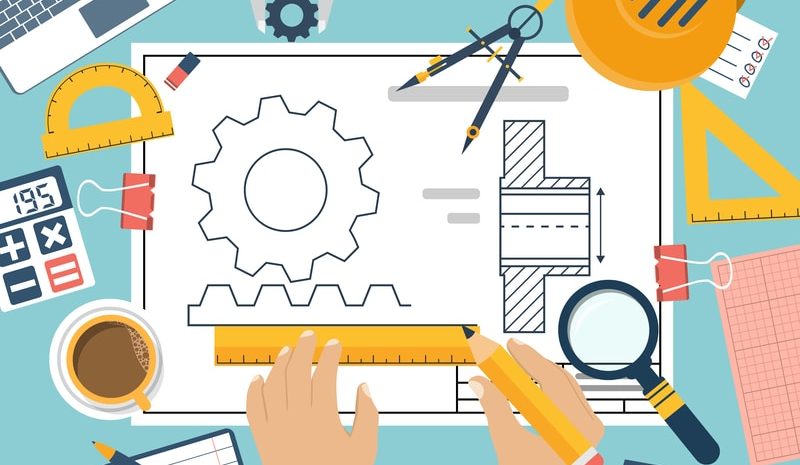
Translating technical drawings and diagrams requires precision, industry knowledge, and specialized tools. Unlike standard text documents, these materials combine visual elements with embedded technical language, where even the smallest error can lead to misinterpretation, incorrect assembly, or product failure. Translating CAD drawings presents unique challenges, as it often involves working with a variety of file formats to ensure technical documentation is accurately localized and remains functional for end-users.
This is particularly critical when working with CAD files, engineering blueprints, or schematics, where numbers, symbols, and spatial layouts must be preserved exactly. Units of measurement must be accurately converted, and annotations or labels must be localized without disrupting the original formatting or design intent.
To achieve this, translation alone is not enough. Desktop publishing (DTP) expertise is essential. DTP specialists adapt the layout, spacing, and formatting of translated diagrams to match the source document, ensuring:
Localized content fits properly within diagrams and callouts
Fonts, symbols, and labels are legible in all target languages
The visual integrity of the drawing is preserved
Compliance with industry or regional formatting standards
Technical communication standards are maintained throughout all translated diagrams and drawings
That’s why comprehensive technical translation services, supported by seamless collaboration between technical translators and multilingual DTP experts, are essential. This combined approach ensures that translated engineering drawings, product schematics, and manuals are not only linguistically accurate but also visually precise, user-friendly, and ready for publication or regulatory submission.
Business Growth Through Consistent Technical Documentation
Consistent and accurate translation of technical manuals drives business growth by improving customer satisfaction, operational efficiency, and market reach. Companies using professional translation services and standardized documentation have reported up to a 30% reduction in product returns and support calls due to clearer instructions.
These consistent translations also aid regulatory compliance, reducing legal risks and speeding up product approvals in new markets. Additionally, delivering high-quality manuals in multiple languages enhances brand reputation, customer loyalty, and international expansion. Investing in technical manual translation services and maintaining consistency is a strategic advantage that reduces costs and strengthens global presence.
Reference: Content Marketing Institute and TechSmith, “The Business Impact of Consistent Technical Documentation,” 2023.
Summary
To sum it up, investing in professional translation services using the right strategies like leveraging advanced technology tools, and maintaining consistent terminology are key strategies to achieving efficient, high-quality translations.
Have questions on how to save costs during translation? Send us a message here.
Frequently Asked Questions
A Translation Memory (TM) is a database that stores previously translated text segments, such as sentences or phrases, to be reused in future translation projects. It helps ensure consistency across documents, speeds up the translation workflow, and reduces costs by avoiding redundant translations.
Ownership of a TM typically belongs to the client commissioning the translation project, especially when the TM is created specifically for their content. However, ownership can vary depending on the terms outlined in the contract with the translation company or agency. Some providers may retain rights to use the TM for future projects, while others transfer full ownership to the client. Clarifying TM ownership upfront is crucial to maintain control over your translated documents and content, and ensure consistent use in future translation workflows. At DEMA Solutions, we always guarantee that you, the client, retain full ownership of your TM.
Far far away, behind the word mountains, far from the countries Vokalia and Consonantia, there live the blind texts. Separated they live in Bookmarksgrove right at the coast
A terminology database (or termbase) is a central resource that stores approved terms and their translations across languages. It ensures consistent, accurate use of technical language in manuals and documents, helping reduce errors, speed up translations, and maintain compliance, especially in regulated industries.
While machine translation technology can produce quick draft translations without human involvement, professional translators are necessary to review and refine these outputs. This process is known as post-editing, wherein human expertise does ensure accuracy, context-appropriateness, and adherence to technical terminology, which are critical in technical manual translations.
Product manuals, installation guides, technical specifications, medical device manuals, and aviation manuals require strict translation in the EU to comply with regulatory standards. Accurate translation in these areas is essential to ensure safety and effectiveness.
While Google Translate and other machine translation tools can provide quick and cost-effective translations, they are generally not suitable for technical manual translations without professional review. Technical translation requires specialized knowledge of industry-specific terminology, precise language, and regulatory compliance, which automated tools cannot guarantee. Relying solely on Google Translate risks inaccuracies, misinterpretations, and potential safety hazards in your manuals. For critical technical documents, it is highly recommended to work with a professional translation company that combine advanced translation technology with expert human translators. This ensures the translations are accurate, culturally appropriate, and compliant with industry standards, ultimately protecting your company’s reputation and user safety.
How can we help?
Tell us what you need and we’ll get back to you with the solutions.